How NBA onboards: a UX teardown
A screen-by-screen UX teardown of NBA's onboarding flow on Android: what each of its 7 steps is for, where it asks for commitment, and what other sports apps do differently. Every screen and quote is from our own capture on a real device.
The short version
Shape: Consent → Value pitch ×4 → Permission prompt ×2.
- 7 screens — longer than the median onboarding flow in the library (4 screens across 151 other apps).
- No sign-up or log-in screen in the 7 onboarding screens we captured — the product comes first.
- Requests a system permission at step 6, after priming it on screen.
- No progress indicator detected across 7 screens.
- Built from button (2 screens), bottom sheet (1 screen) and dialog (1 screen) — the most common components we detected in the flow.
Step by step
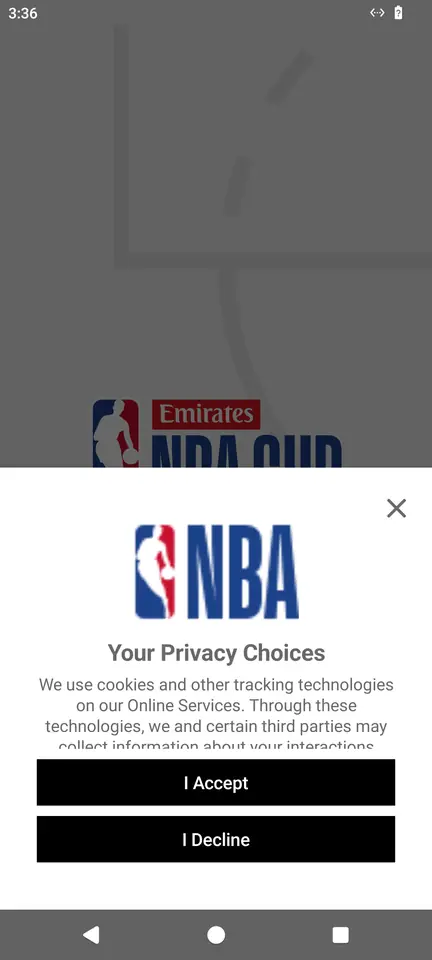
“Your Privacy Choices”
This screen asks for privacy / cookie consent. On screen: Banner Logo
, I Accept
. Next tap: “Touch outside”.
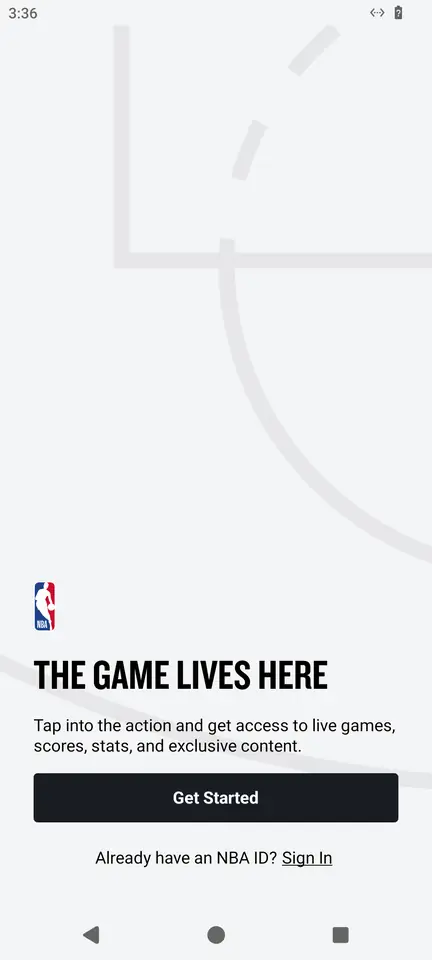
“THE GAME LIVES HERE”
This screen sells the product before asking for anything. On screen: Get Started
, Already have an NBA ID?
.
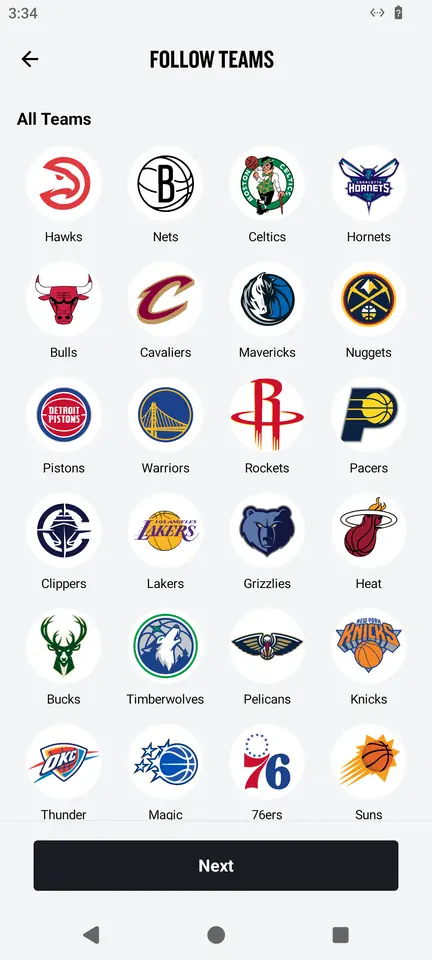
“All Teams”
This screen sells the product before asking for anything. On screen: Hawks
, Nets
.
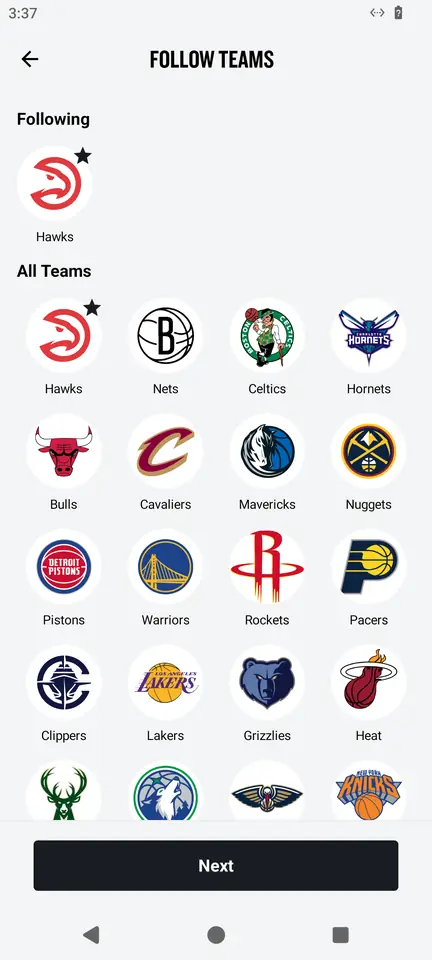
“Following”
This screen sells the product before asking for anything. On screen: Hawks
, All Teams
.
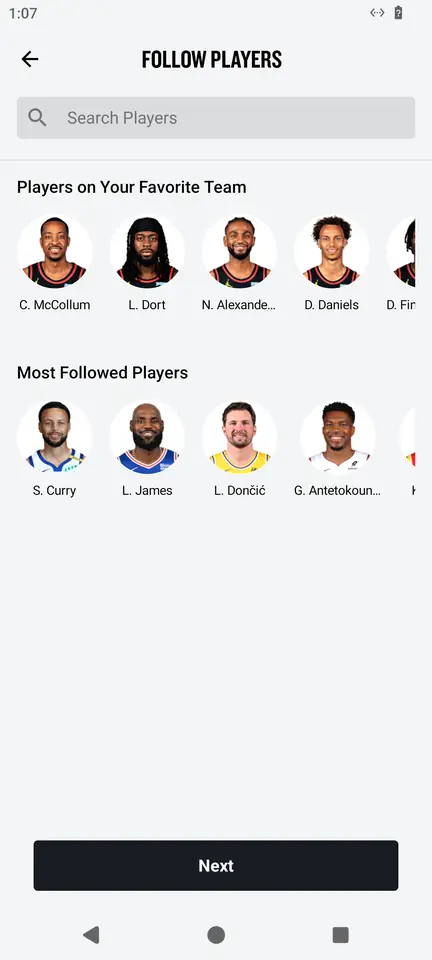
“Players on Your Favorite Team”
This screen sells the product before asking for anything. On screen: CJ McCollum
, C. McCollum
.
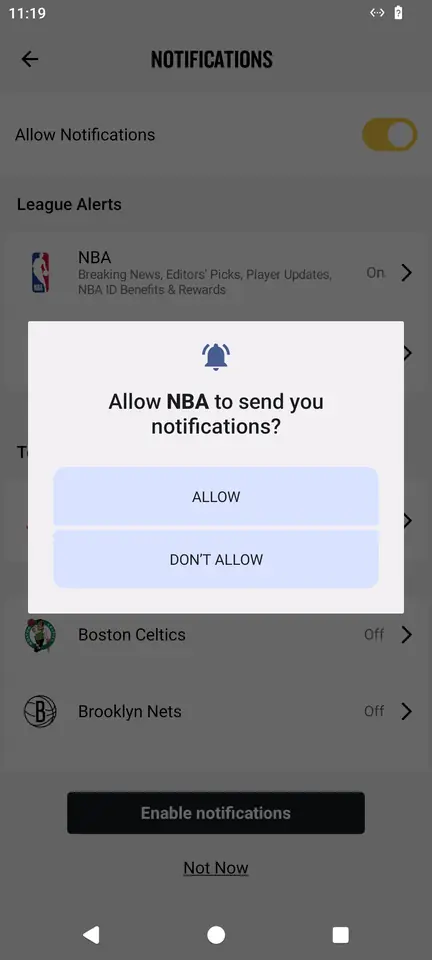
“Allow NBA to send you notifications?”
This screen asks for a system permission. On screen: ALLOW
, DON’T ALLOW
. Next tap: “Allow”.
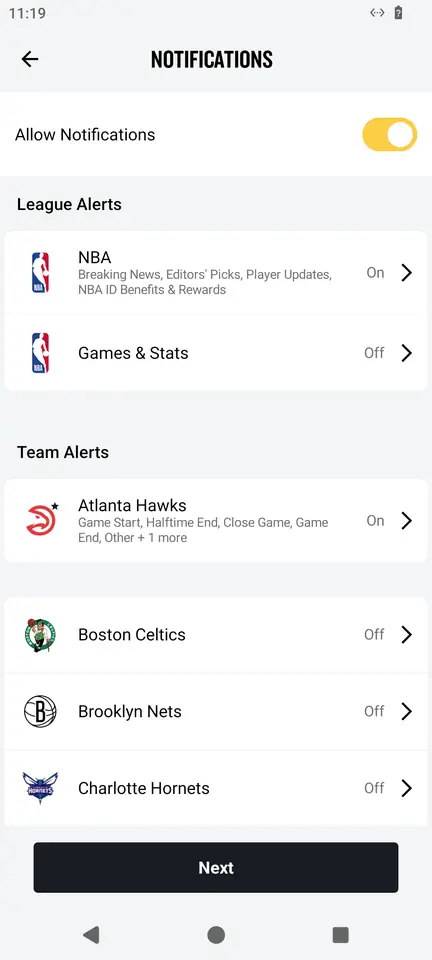
“Allow Notifications”
This screen asks for a system permission. On screen: League Alerts
, NBA
.
What to steal from NBA
- Delay the account wall: NBA lets users through 7 onboarding screens without signing up.
UI components in this flow
Other NBA flows
As an X thread
- 1/ How NBA onboards on Android: 7 screens, step by step. A UX teardown 🧵
- 2/ The shape of the flow: Consent → Value pitch ×4 → Permission prompt ×2.
- 3/ Step 1 — consent: “Your Privacy Choices”. It asks for privacy / cookie consent. Tap: “Touch outside”.
- 4/ Step 2 — value pitch: “THE GAME LIVES HERE”. It sells the product before asking for anything.
- 5/ Step 3 — value pitch: “All Teams”. It sells the product before asking for anything.
- 6/ No sign-up or log-in screen in the 7 onboarding screens we captured — the product comes first.
- 7/ Requests a system permission at step 6, after priming it on screen.
- 8/ No progress indicator detected across 7 screens.
- 9/ What to steal — Delay the account wall: NBA lets users through 7 onboarding screens without signing up.
- 10/ Every screen, in order, free: https://flowtape.ai/teardown/nba/
FAQ
How many screens is NBA's onboarding flow?
We captured 7 screens of NBA's onboarding flow on a real Android device. Its shape: Consent → Value pitch ×4 → Permission prompt ×2.
When does NBA ask you to create an account?
Not within the 7 screens we captured — there is no sign-up or log-in screen and the flow lets users in without an account.
What UI patterns does NBA use?
Across the 19 NBA screens in the library we detected welcome screen, skip button, permission priming, cookie consent banner and email sign-up form.
What can designers learn from NBA's onboarding flow?
Delay the account wall: NBA lets users through 7 onboarding screens without signing up.
Captured on a real Android device · last updated 2026-11-14