How Genius onboards: a UX teardown
A screen-by-screen UX teardown of Genius's onboarding flow on Android: what each of its 4 steps is for, where it asks for commitment, and what other streaming & entertainment apps do differently. Every screen and quote is from our own capture on a real device.
The short version
Shape: Value pitch ×3 → Permission prompt.
- 4 screens — the same length as the median onboarding flow in the library (4 screens across 151 other apps).
- No sign-up or log-in screen in the 4 onboarding screens we captured — the product comes first.
- Requests a system permission at step 4, after priming it on screen.
- Offers a way out (a skip option) on 4 screens.
- One of the few streaming & entertainment apps here using the “Permission priming” pattern (only 8 of the 42 others do).
- Built from button (4 screens), page indicator dots (4 screens) and toolbar (4 screens) — the most common components we detected in the flow.
Step by step
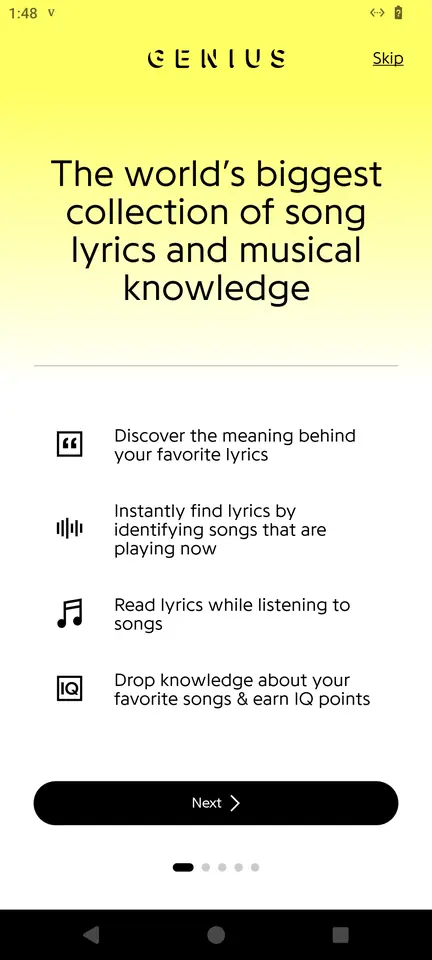
“Genius onboarding”
This screen sells the product before asking for anything. On screen: Skip
, The world’s biggest collection of song lyrics and musical knowledge
.
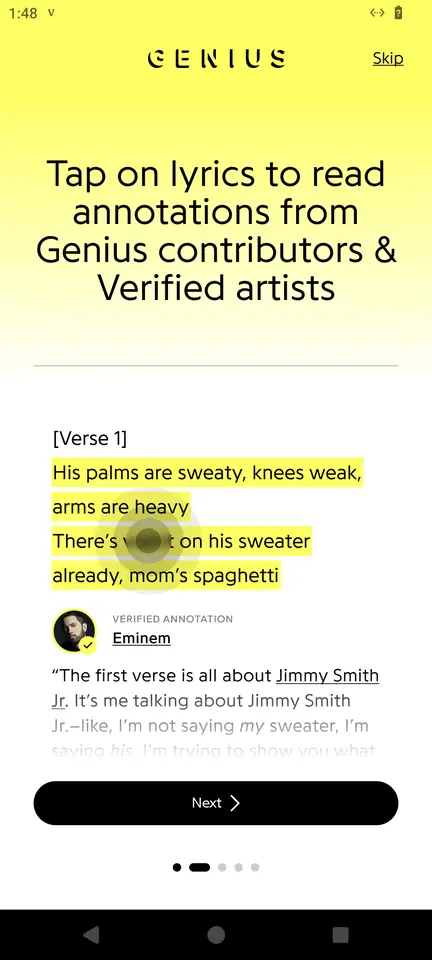
“Tap on lyrics to read annotations from Genius contributors & Verified artists”
This screen sells the product before asking for anything. On screen: Genius onboarding
, Skip
.
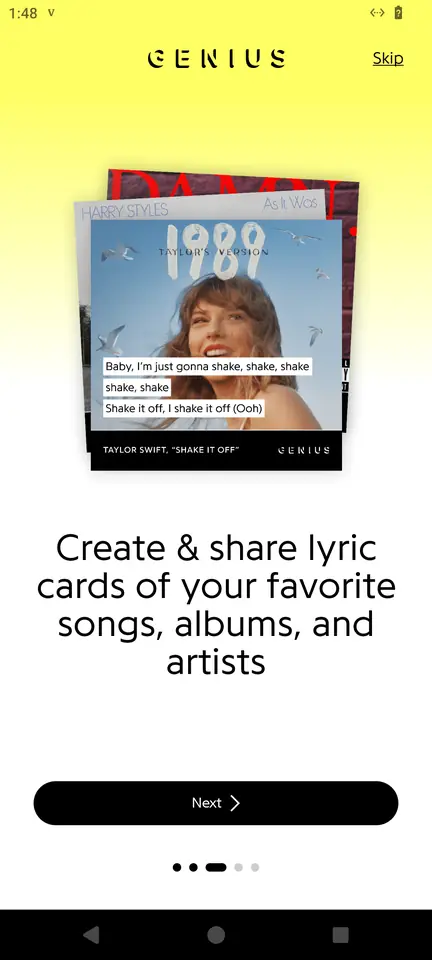
“Create & share lyric cards of your favorite songs, albums, and artists”
This screen sells the product before asking for anything. On screen: Genius onboarding
, Skip
.
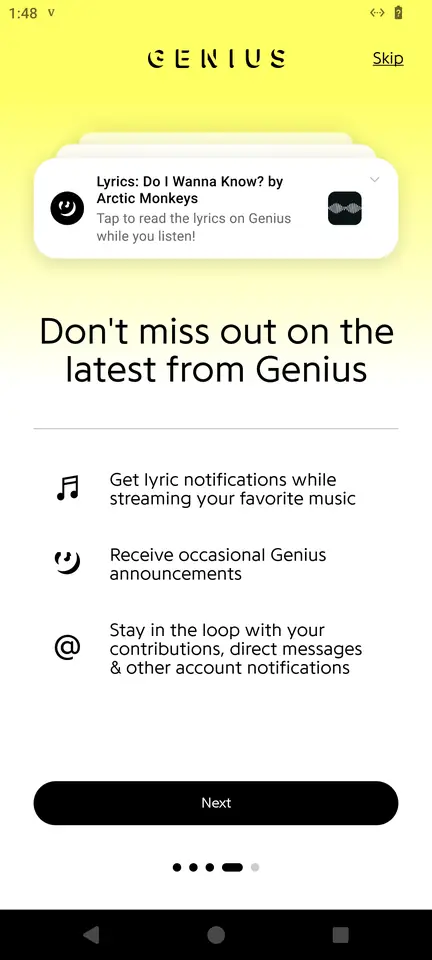
“Don't miss out on the latest from Genius”
This screen asks for a system permission. On screen: Genius onboarding
, Skip
.
What to steal from Genius
- Delay the account wall: Genius lets users through 4 onboarding screens without signing up.
UI components in this flow
Other Genius flows
As an X thread
- 1/ How Genius onboards on Android: 4 screens, step by step. A UX teardown 🧵
- 2/ The shape of the flow: Value pitch ×3 → Permission prompt.
- 3/ Step 1 — value pitch: “Genius onboarding”. It sells the product before asking for anything.
- 4/ Step 2 — value pitch: “Tap on lyrics to read annotations from Genius contributors & Verified artists”. It sells the product before asking for anything.
- 5/ Step 3 — value pitch: “Create & share lyric cards of your favorite songs, albums, and artists”. It sells the product before asking for anything.
- 6/ No sign-up or log-in screen in the 4 onboarding screens we captured — the product comes first.
- 7/ Requests a system permission at step 4, after priming it on screen.
- 8/ Offers a way out (a skip option) on 4 screens.
- 9/ What to steal — Delay the account wall: Genius lets users through 4 onboarding screens without signing up.
- 10/ Every screen, in order, free: https://flowtape.ai/teardown/genius/
FAQ
How many screens is Genius's onboarding flow?
We captured 4 screens of Genius's onboarding flow on a real Android device. Its shape: Value pitch ×3 → Permission prompt.
When does Genius ask you to create an account?
Not within the 4 screens we captured — there is no sign-up or log-in screen and the flow lets users in without an account.
What UI patterns does Genius use?
Across the 12 Genius screens in the library we detected welcome screen, skip button and permission priming.
What can designers learn from Genius's onboarding flow?
Delay the account wall: Genius lets users through 4 onboarding screens without signing up.
Captured on a real Android device · last updated 2026-11-14