How Snapchat onboards: a UX teardown
A screen-by-screen UX teardown of Snapchat's onboarding flow on Android: what each of its 8 steps is for, where it asks for commitment, and what other social apps do differently. Every screen and quote is from our own capture on a real device.
The short version
Shape: Value pitch ×2 → Permission prompt ×3 → Question ×2 → Account ask.
- 8 screens — longer than the median onboarding flow in the library (4 screens across 151 other apps).
- Asks 2 questions along the way, starting at step 6 with “What's your name?”.
- Asks for an account at step 8 of 8, after 2 personalisation questions (“Your username is carter26698”).
- Requests a system permission at step 3, after priming it on screen.
- Shows progress on 3 of 8 screens, so the user can see how much is left.
- One of the few social apps here using the “Onboarding survey” pattern (only 1 of the 12 others do).
- Built from button (3 screens), dialog (3 screens) and text field (2 screens) — the most common components we detected in the flow.
Step by step
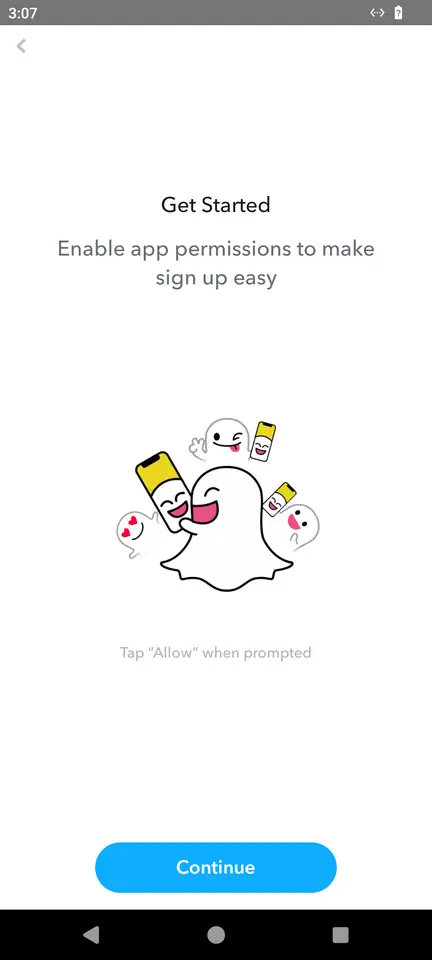
“Get Started”
This screen sells the product before asking for anything. On screen: Enable app permissions to make sign up easy
, Tap “Allow” when prompted
. Next tap: “Get Started”.
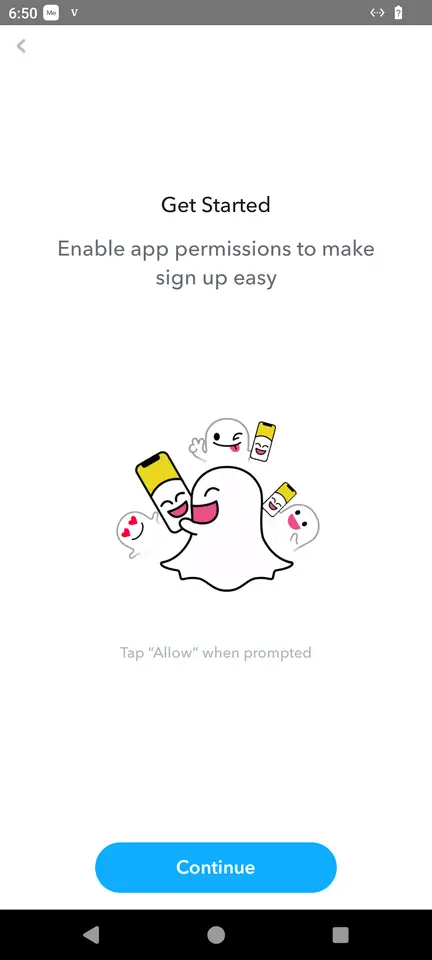
“Get Started”
This screen sells the product before asking for anything. On screen: Enable app permissions to make sign up easy
, Tap “Allow” when prompted
.
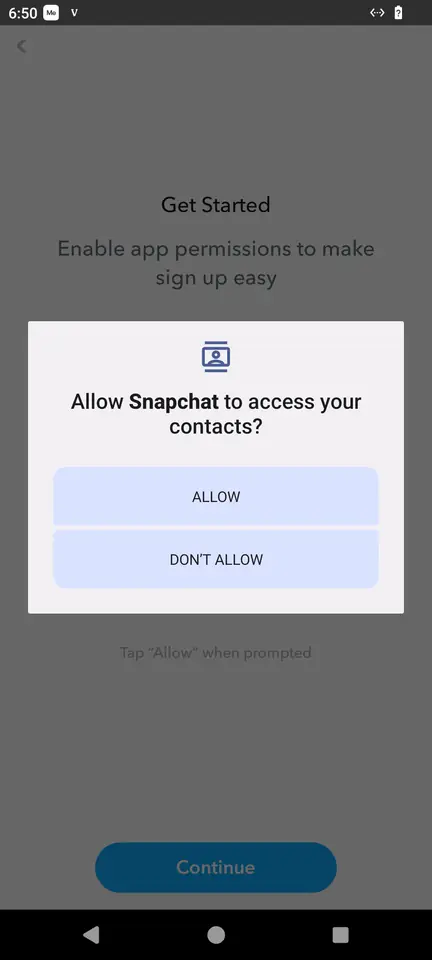
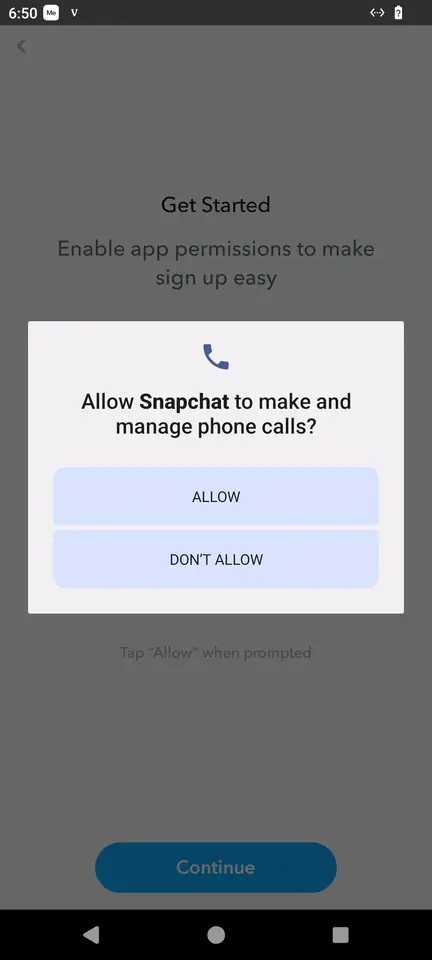
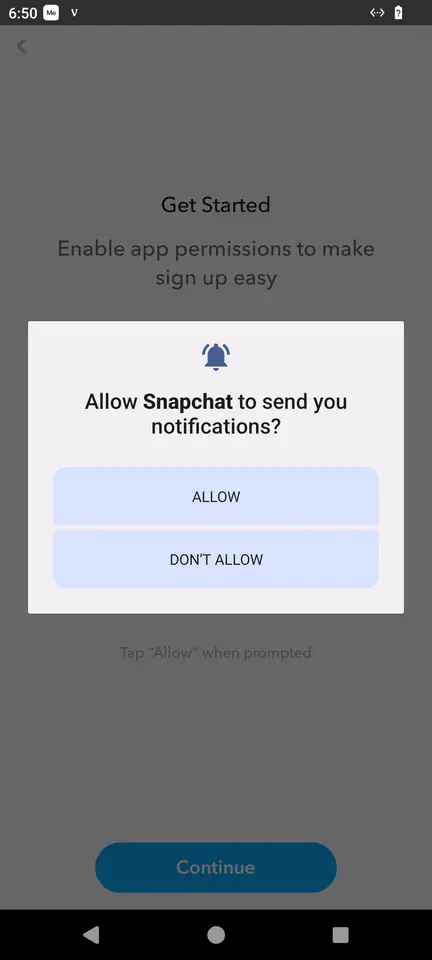
“Allow Snapchat to send you notifications?”
This screen asks for a system permission. On screen: ALLOW
, DON’T ALLOW
. Next tap: “Allow”.
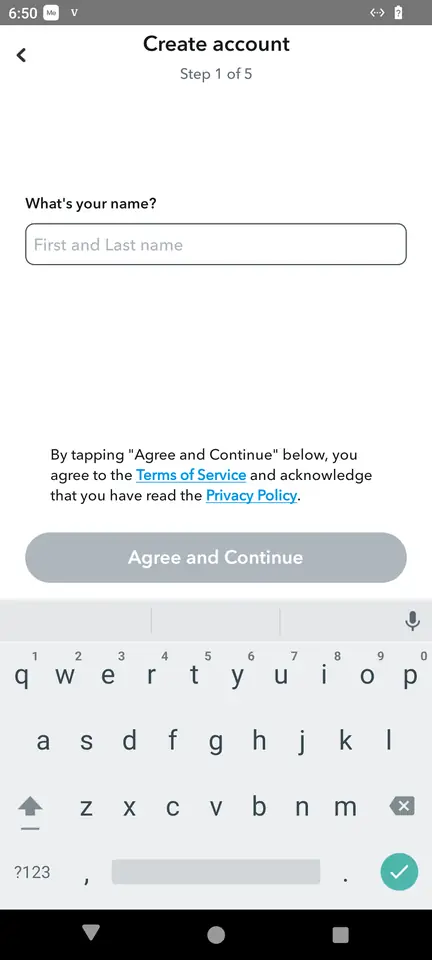
“What's your name?”
This screen asks the user about themselves to personalise what comes next. On screen: Create account
, Step 1 of 5
. Next tap: “What's your name?=Carter”.
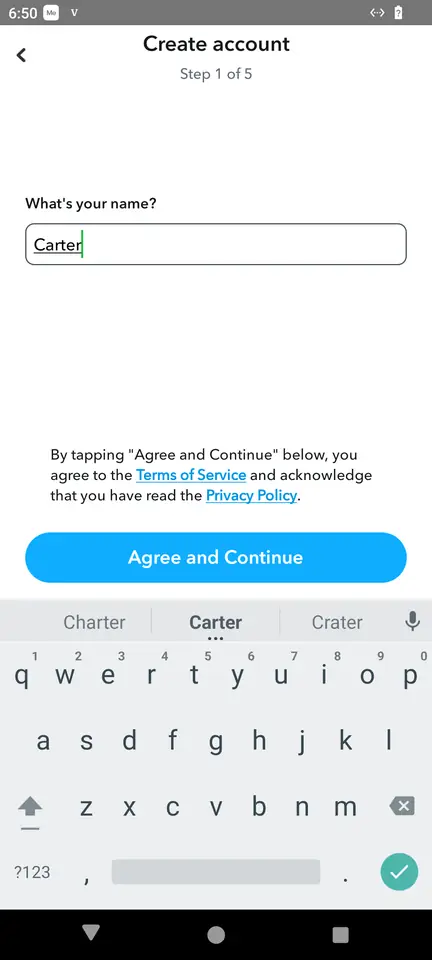
“Carter”
This screen asks the user about themselves to personalise what comes next. On screen: Create account
, Step 1 of 5
. Next tap: “Agree and Continue”.
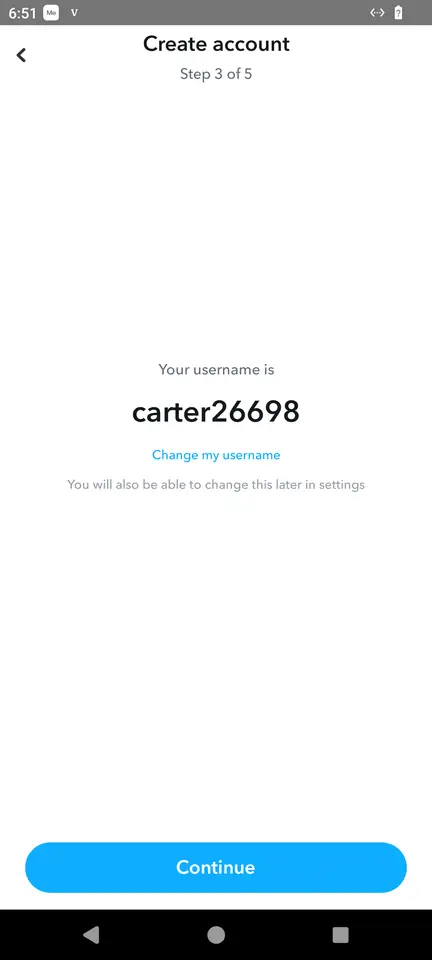
“Your username is carter26698”
This screen asks the user to sign up or log in. On screen: Change my username
, You will also be able to change this later in settings
. Next tap: “Continue”.
What to steal from Snapchat
- Personalise before you ask: Snapchat asks 2 questions before the account screen, so sign-up arrives once the user has already invested in their answers.
- Show progress on a long flow: 3 of Snapchat's 8 screens carry a progress indicator.
- Offer one-tap social sign-in on the account screen to cut typing on mobile.
UI components in this flow
Other Snapchat flows
As an X thread
- 1/ How Snapchat onboards on Android: 8 screens, step by step. A UX teardown 🧵
- 2/ The shape of the flow: Value pitch ×2 → Permission prompt ×3 → Question ×2 → Account ask.
- 3/ Step 1 — value pitch: “Get Started”. It sells the product before asking for anything. Tap: “Get Started”.
- 4/ Step 2 — value pitch: “Get Started”. It sells the product before asking for anything.
- 5/ Step 3 — permission prompt: “Allow Snapchat to access your contacts?”. It asks for a system permission. Tap: “Allow”.
- 6/ Asks 2 questions along the way, starting at step 6 with “What's your name?”.
- 7/ Asks for an account at step 8 of 8, after 2 personalisation questions (“Your username is carter26698”).
- 8/ Requests a system permission at step 3, after priming it on screen.
- 9/ What to steal — Personalise before you ask: Snapchat asks 2 questions before the account screen, so sign-up arrives once the user has already invested in their answers.
- 10/ Every screen, in order, free: https://flowtape.ai/teardown/snapchat/
FAQ
How many screens is Snapchat's onboarding flow?
We captured 8 screens of Snapchat's onboarding flow on a real Android device. Its shape: Value pitch ×2 → Permission prompt ×3 → Question ×2 → Account ask.
When does Snapchat ask you to create an account?
At step 8 of 8, after 2 personalisation questions.
What UI patterns does Snapchat use?
Across the 20 Snapchat screens in the library we detected welcome screen, onboarding progress indicator, onboarding survey, permission priming, social login buttons and terms and conditions agreement.
What can designers learn from Snapchat's onboarding flow?
Personalise before you ask: Snapchat asks 2 questions before the account screen, so sign-up arrives once the user has already invested in their answers. Show progress on a long flow: 3 of Snapchat's 8 screens carry a progress indicator.
Captured on a real Android device · last updated 2026-11-14