How Vocabulary onboards: a UX teardown
A screen-by-screen UX teardown of Vocabulary's onboarding flow on Android: what each of its 29 steps is for, where it asks for commitment, and what other language learning apps do differently. Every screen and quote is from our own capture on a real device.
The short version
Shape: Value pitch → Question → Info → Question ×4 → Info → Question → Info → Question → Info → Permission prompt ×2 → Question ×4 → Info → Question ×4 → Info → Question ×3 → Info → Value pitch.
- 29 screens — longer than the median onboarding flow in the library (4 screens across 152 other apps).
- Asks 18 questions along the way, starting at step 2 with “How did you hear about Vocabulary?”.
- No sign-up or log-in screen in the 29 onboarding screens we captured — the product comes first.
- Requests a system permission at step 13, after priming it on screen.
- No progress indicator detected across 29 screens.
- Offers a way out (a skip option) on 11 screens.
- One of the few language learning apps here using the “Skip button” pattern (only 1 of the 6 others do).
- Built from text field (2 screens), button (1 screen) and dialog (1 screen) — the most common components we detected in the flow.
Step by step
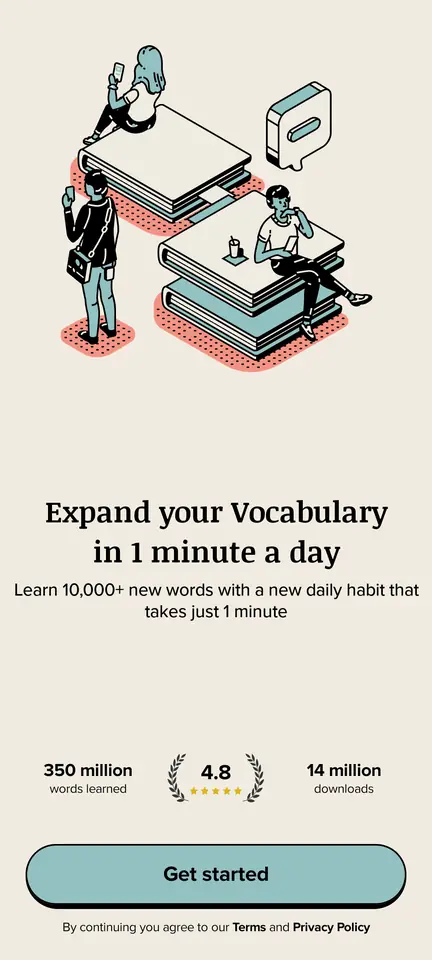
“Expand your Vocabulary in 1 minute a day”
This screen sells the product before asking for anything. On screen: Learn 10,000+ new words with a new daily habit that takes just 1 minute
, 350 million
. Next tap: “Get started”.
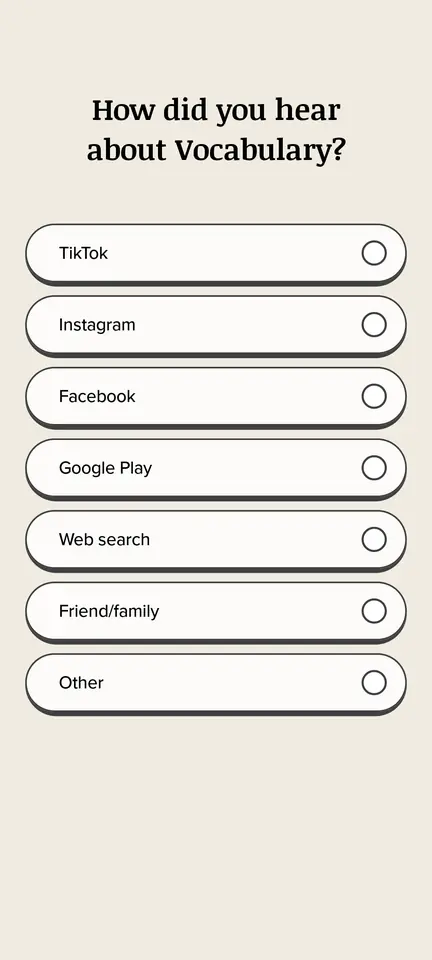
“How did you hear about Vocabulary?”
This screen asks the user about themselves to personalise what comes next. On screen: TikTok
, Instagram
. Next tap: “Tik tok”.
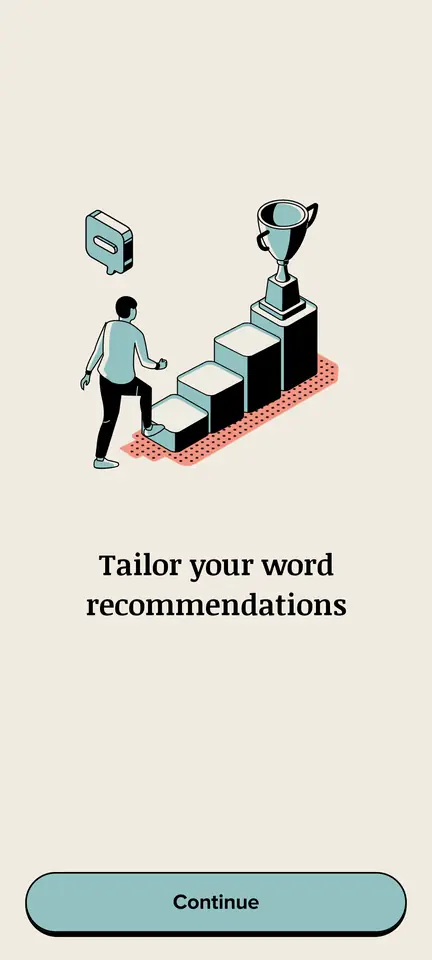
“Tailor your word recommendations”
This screen explains a feature or a step. On screen: Continue
. Next tap: “Continue”.
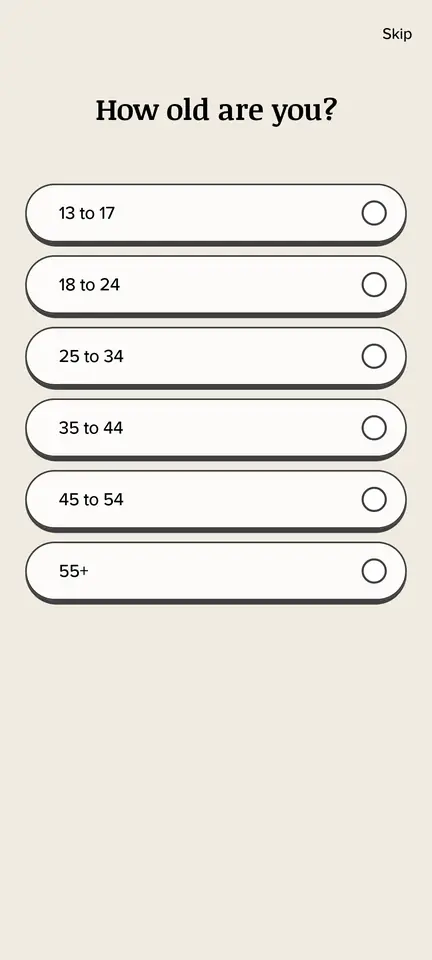
“How old are you?”
This screen asks the user about themselves to personalise what comes next. On screen: Skip
, 13 to 17
. Next tap: “25 to 34”.
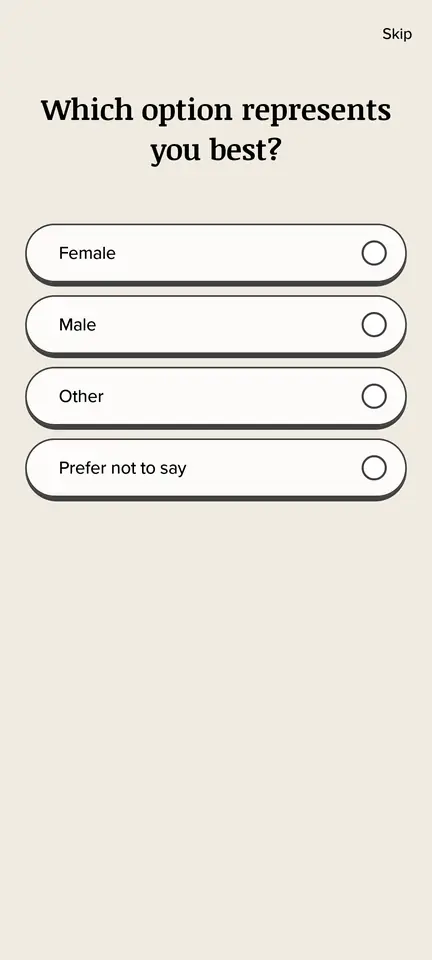
“Which option represents you best?”
This screen asks the user about themselves to personalise what comes next. On screen: Skip
, Female
. Next tap: “Skip”.
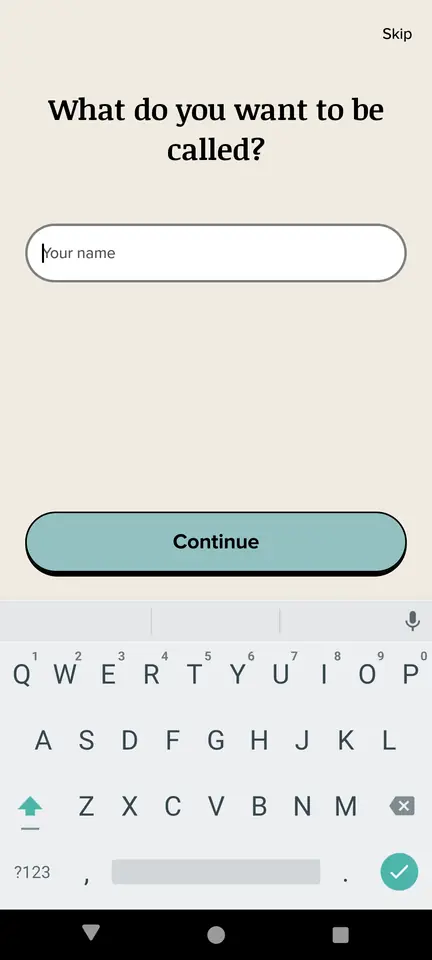
“What do you want to be called?”
This screen asks the user about themselves to personalise what comes next. On screen: Skip
, Your name
. Next tap: “What do you want to be called?=Alex”.
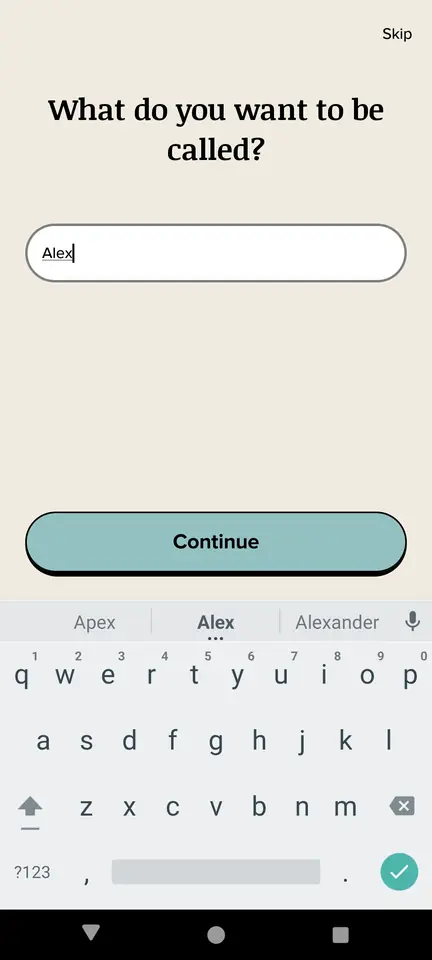
“What do you want to be called?”
This screen asks the user about themselves to personalise what comes next. On screen: Skip
, Alex
. Next tap: “Continue”.
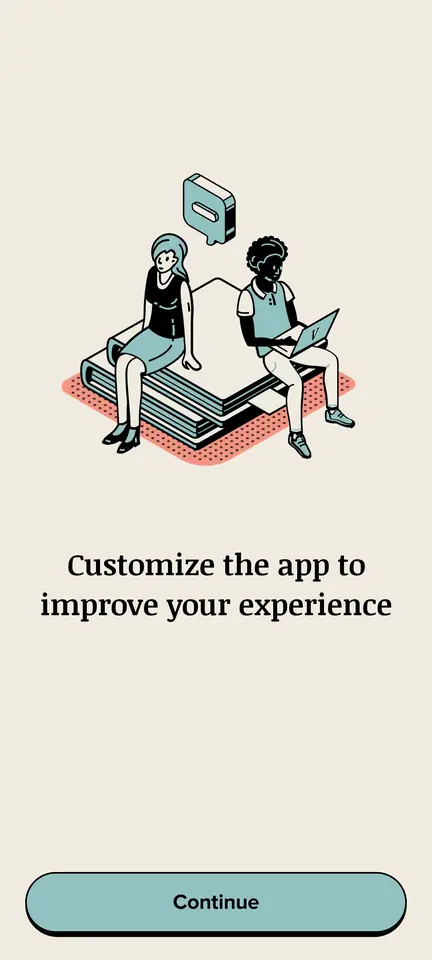
“Customize the app to improve your experience”
This screen explains a feature or a step. On screen: Continue
. Next tap: “Continue”.
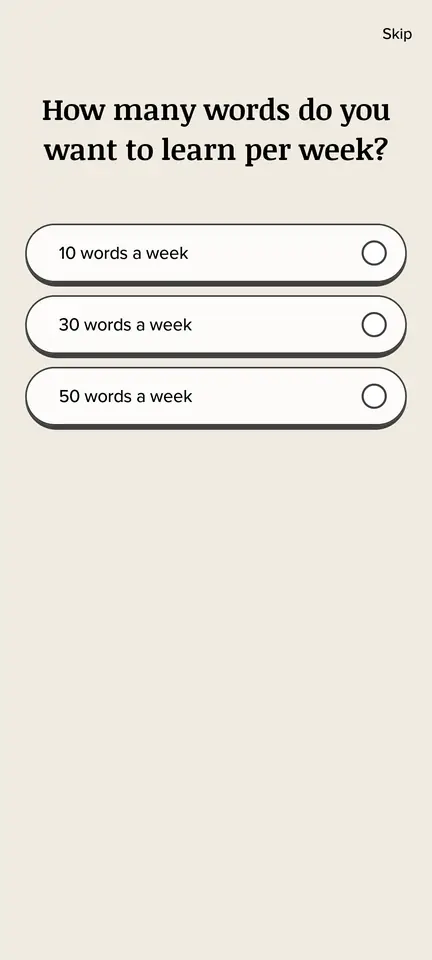
“How many words do you want to learn per week?”
This screen asks the user about themselves to personalise what comes next. On screen: Skip
, 10 words a week
. Next tap: “10 words a week”.
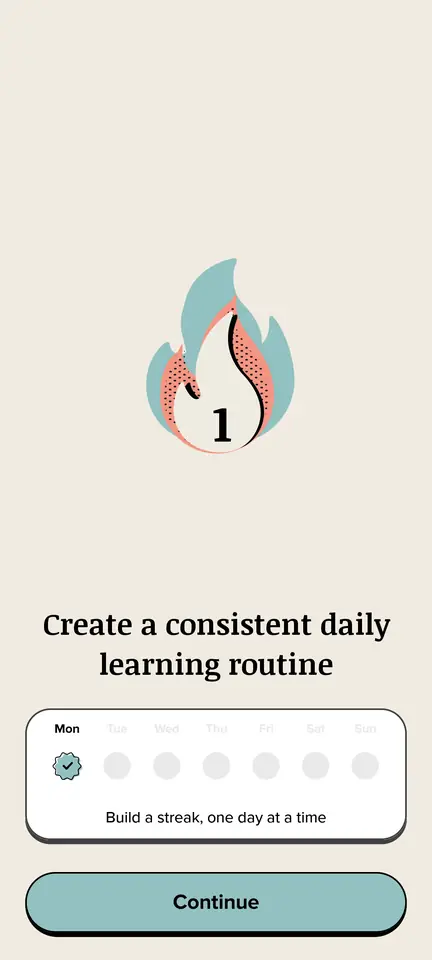
“Create a consistent daily learning routine”
This screen explains a feature or a step. On screen: Mon
, Tue
. Next tap: “Continue”.
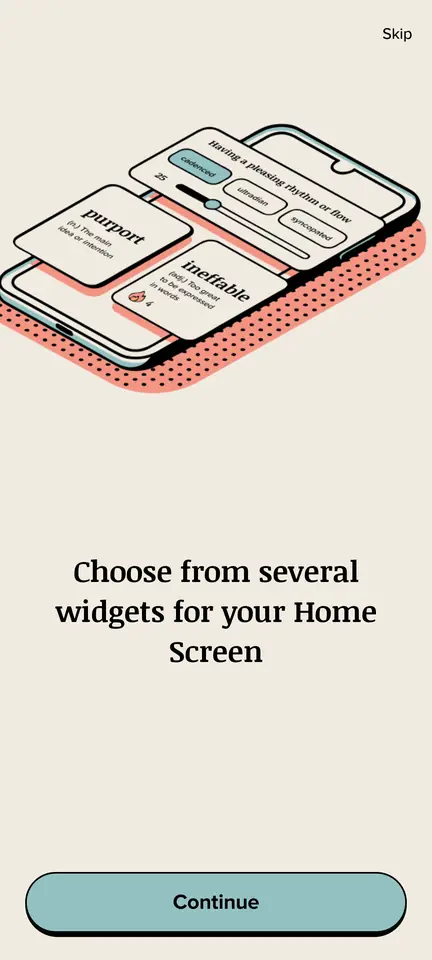
“Choose from several widgets for your Home Screen”
This screen asks the user about themselves to personalise what comes next. On screen: Continue
. Next tap: “Continue”.
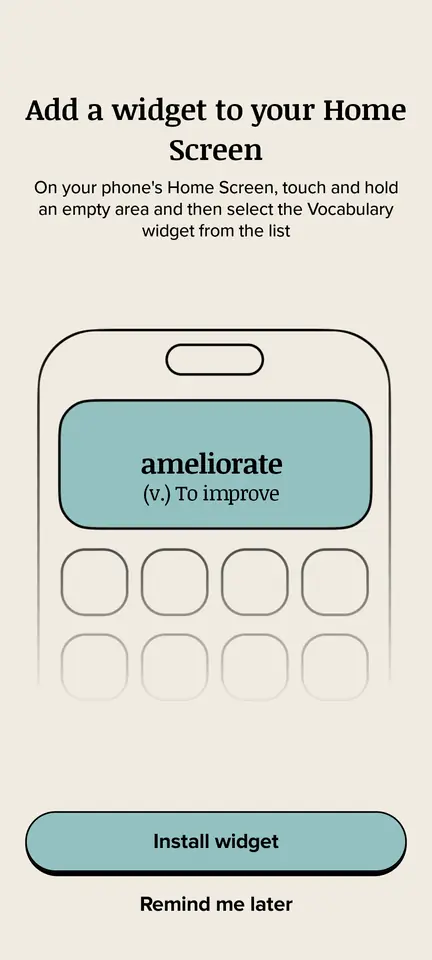
“Add a widget to your Home Screen”
This screen explains a feature or a step. On screen: Install widget
, Remind me later
. Next tap: “Remind me later”.
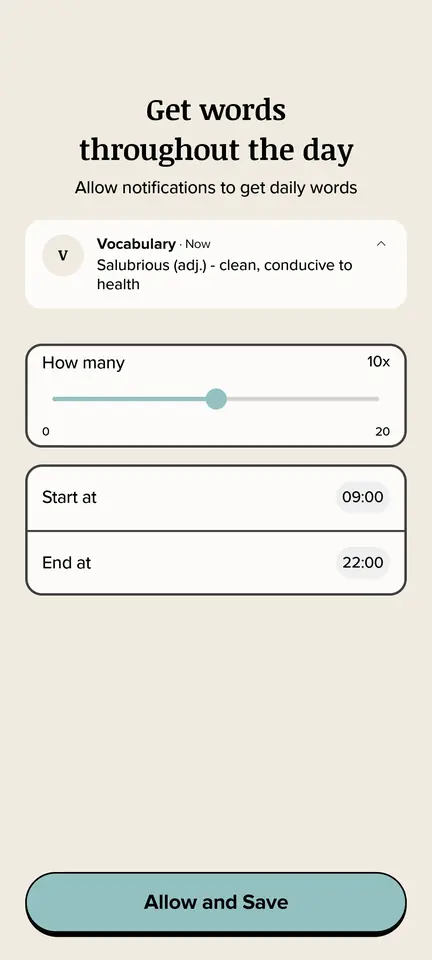
“Get words throughout the day”
This screen asks for a system permission. On screen: Allow notifications to get daily words
, Vocabulary
. Next tap: “Allow and Save”.
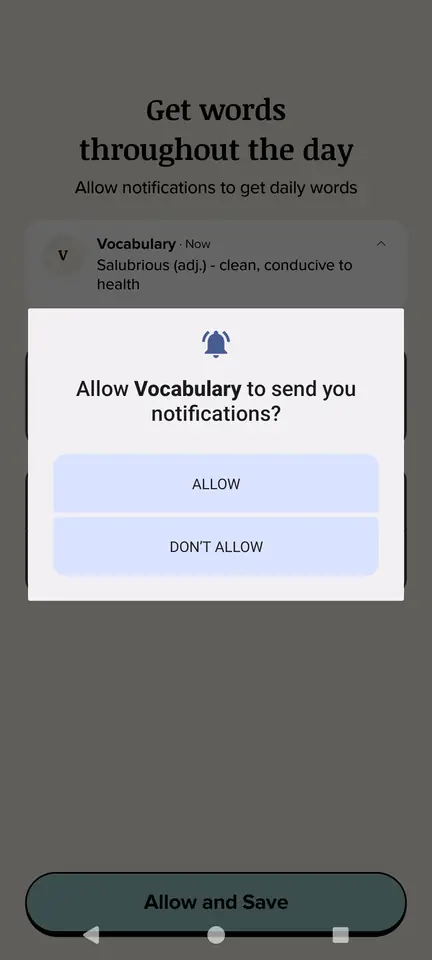
“Allow Vocabulary to send you notifications?”
This screen asks for a system permission. On screen: ALLOW
, DON’T ALLOW
. Next tap: “Allow”.
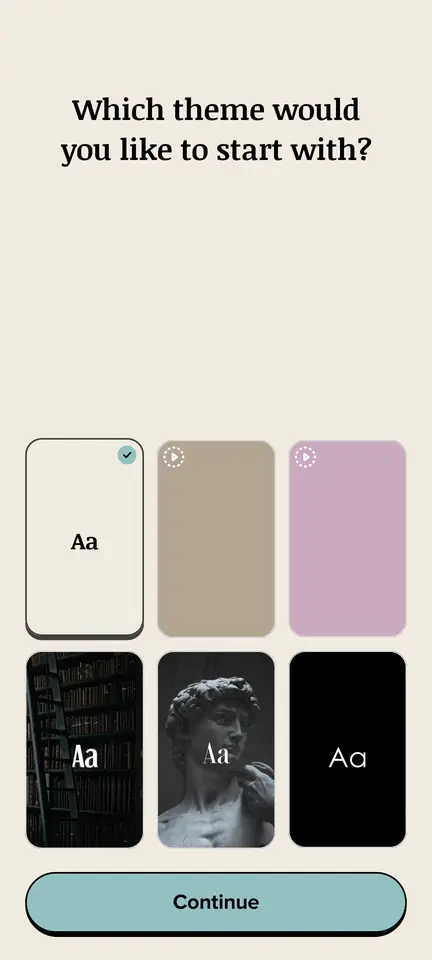
“Which theme would you like to start with?”
This screen asks the user about themselves to personalise what comes next. On screen: Continue
. Next tap: “Continue”.
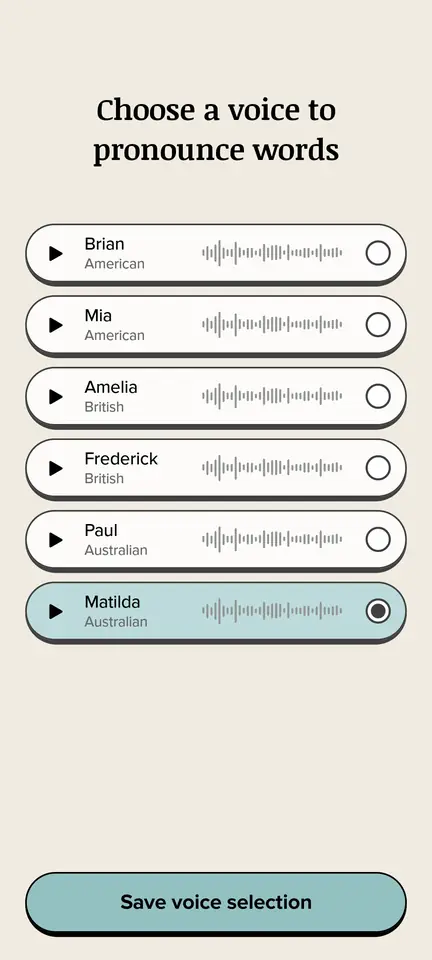
“Choose a voice to pronounce words”
This screen asks the user about themselves to personalise what comes next. On screen: Brian
, American
. Next tap: “Save voice selection”.
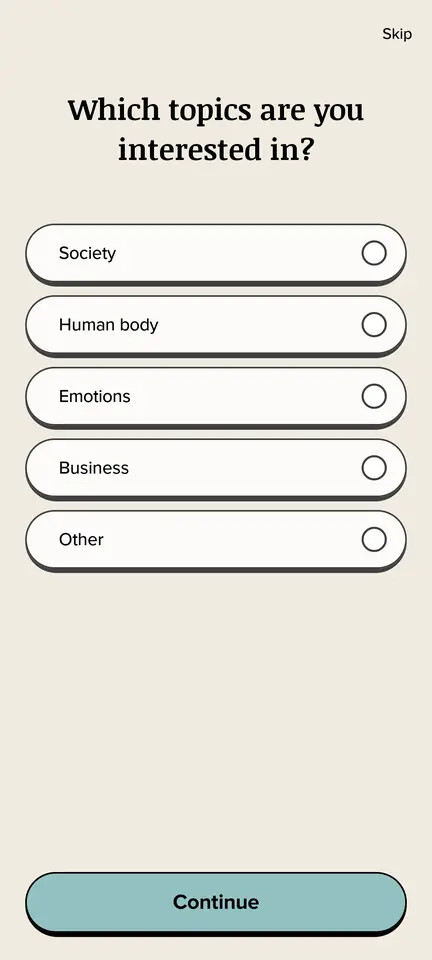
“Which topics are you interested in?”
This screen asks the user about themselves to personalise what comes next. On screen: Skip
, Society
. Next tap: “Society”.
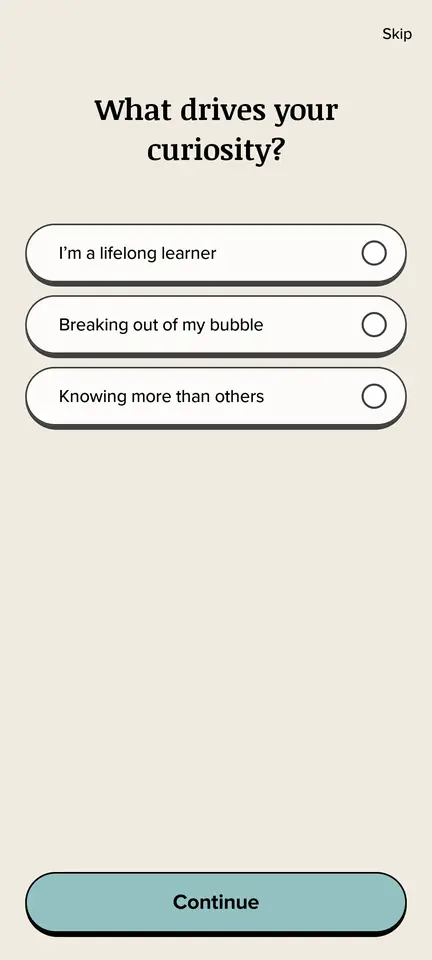
“What drives your curiosity?”
This screen asks the user about themselves to personalise what comes next. On screen: Skip
, I’m a lifelong learner
. Next tap: “I’m a lifelong learner”.
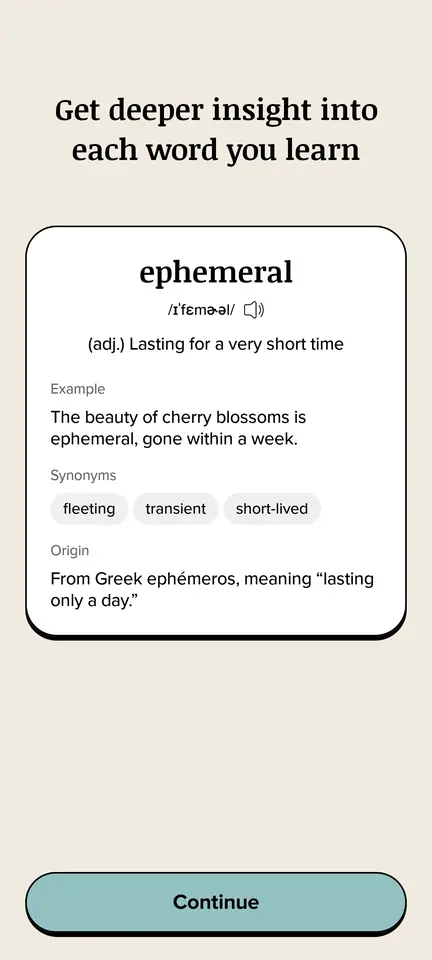
“Get deeper insight into each word you learn”
This screen explains a feature or a step. On screen: ephemeral
, /ɪˈfɛmɚəl/
. Next tap: “Continue”.
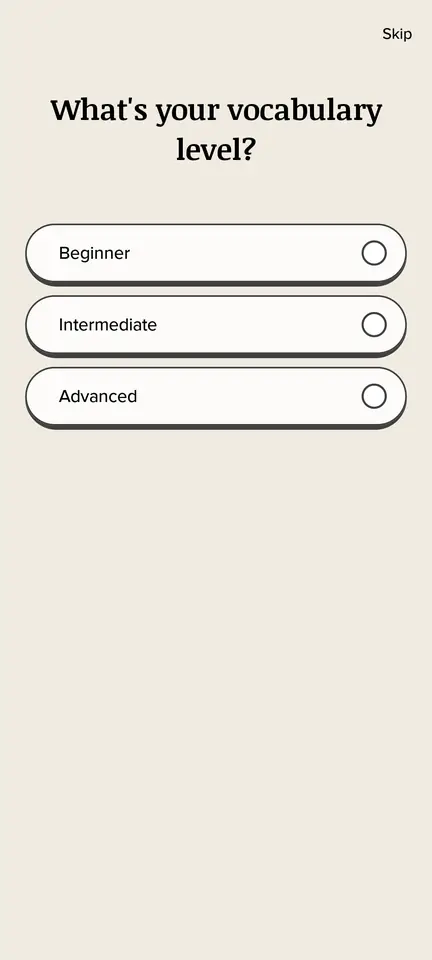
“What's your vocabulary level?”
This screen asks the user about themselves to personalise what comes next. On screen: Skip
, Beginner
. Next tap: “Beginner”.
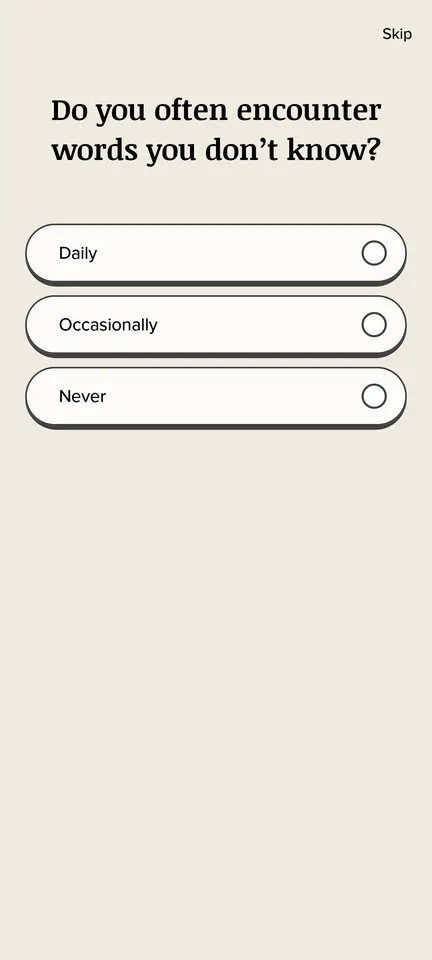
“Do you often encounter words you don’t know?”
This screen asks the user about themselves to personalise what comes next. On screen: Skip
, Daily
. Next tap: “Skip”.
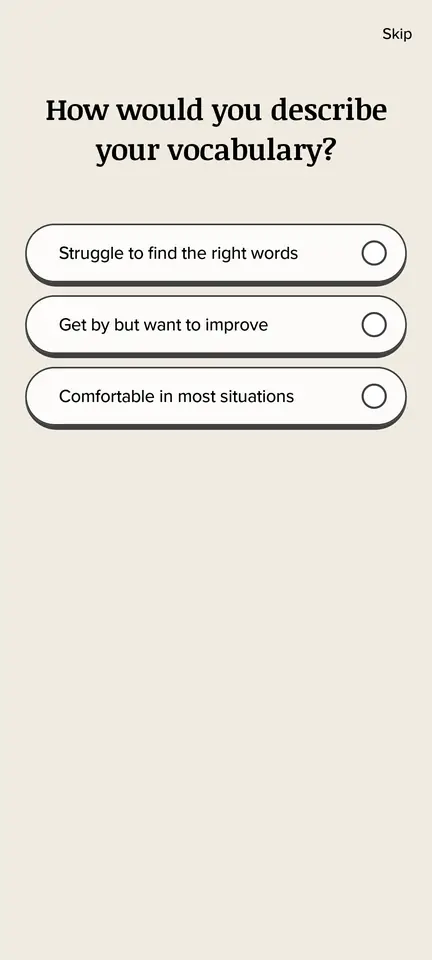
“How would you describe your vocabulary?”
This screen asks the user about themselves to personalise what comes next. On screen: Skip
, Struggle to find the right words
. Next tap: “Struggle to find the right words”.
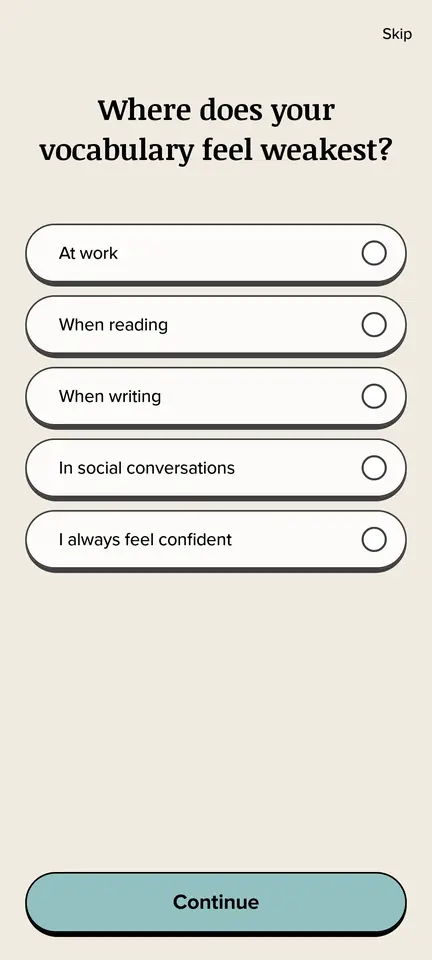
“Where does your vocabulary feel weakest?”
This screen asks the user about themselves to personalise what comes next. On screen: Skip
, At work
. Next tap: “Continue”.
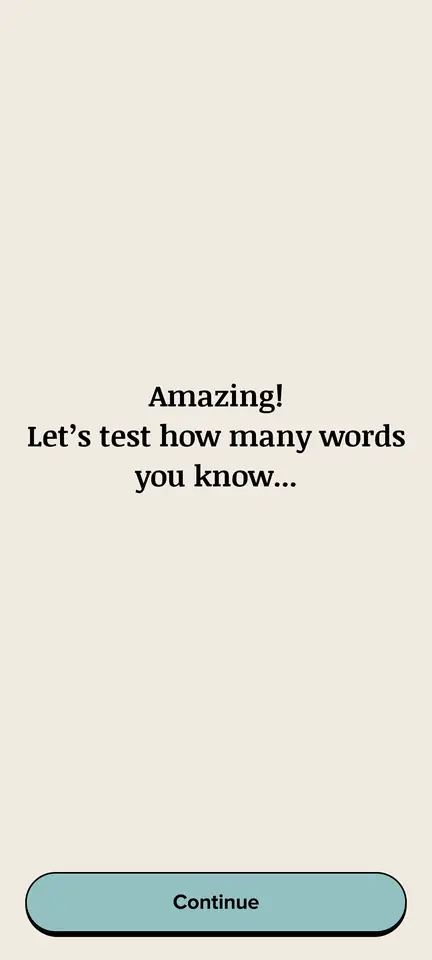
“Amazing! Let’s test how many words you know...”
This screen explains a feature or a step. On screen: Continue
. Next tap: “Continue”.
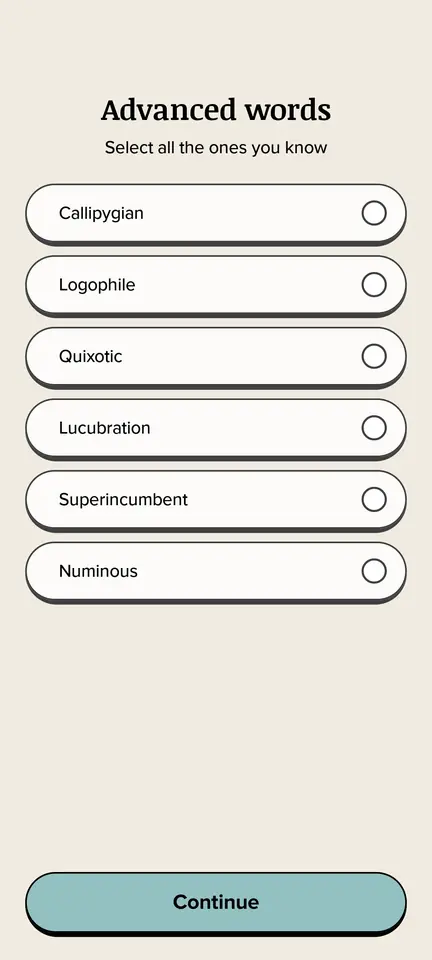
“Beginner words”
This screen asks the user about themselves to personalise what comes next. On screen: Select all the ones you know
, Squint
. Next tap: “Continue”.
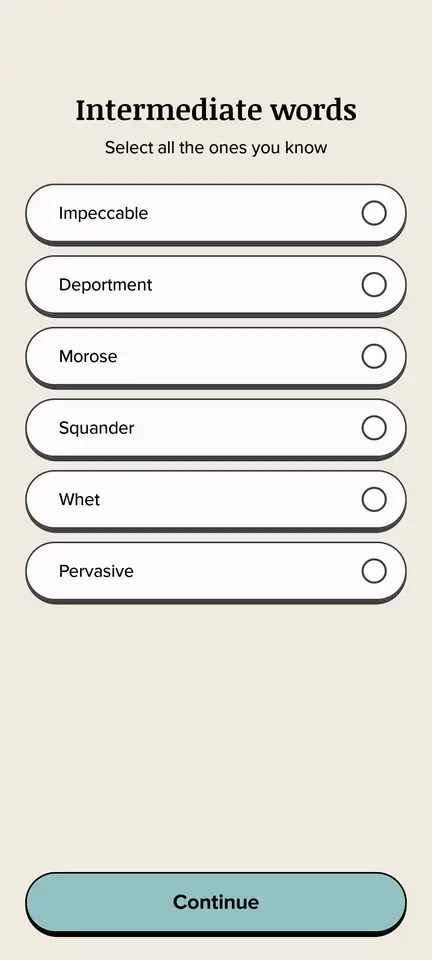
“Intermediate words”
This screen asks the user about themselves to personalise what comes next. On screen: Select all the ones you know
, Impeccable
. Next tap: “Continue”.
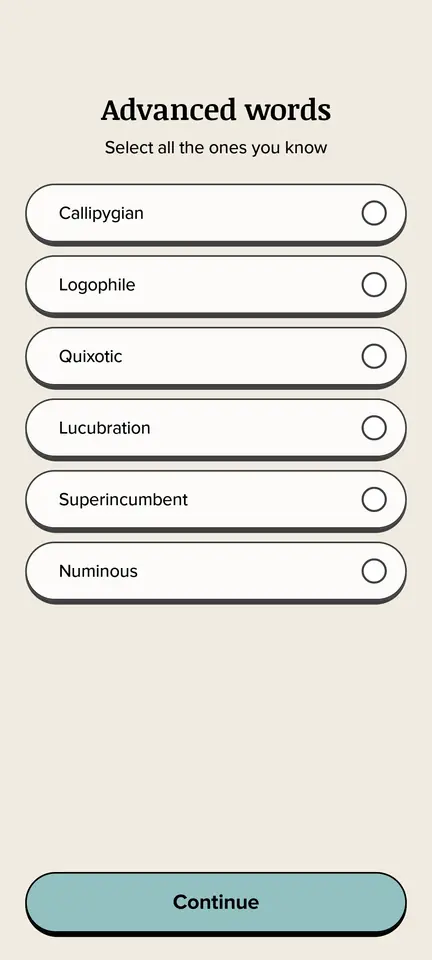
“Advanced words”
This screen asks the user about themselves to personalise what comes next. On screen: Select all the ones you know
, Callipygian
. Next tap: “Continue”.
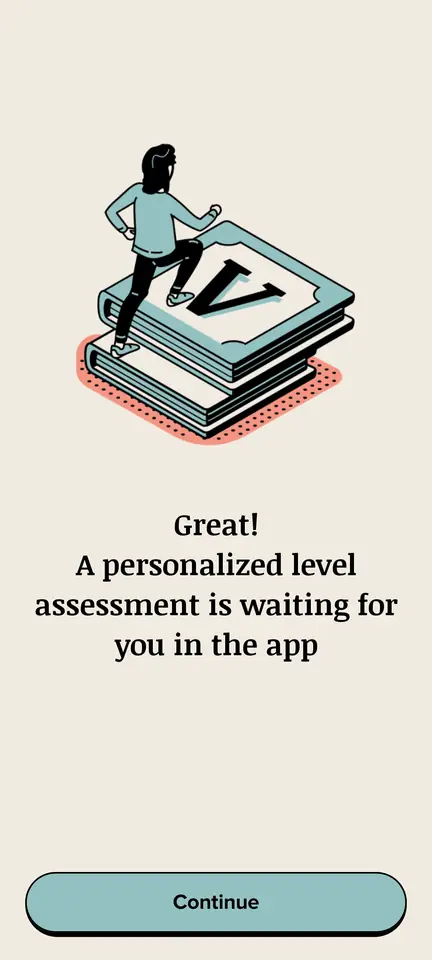
“Great! A personalized level assessment is waiting for you in the app”
This screen explains a feature or a step. On screen: Continue
. Next tap: “Continue”.
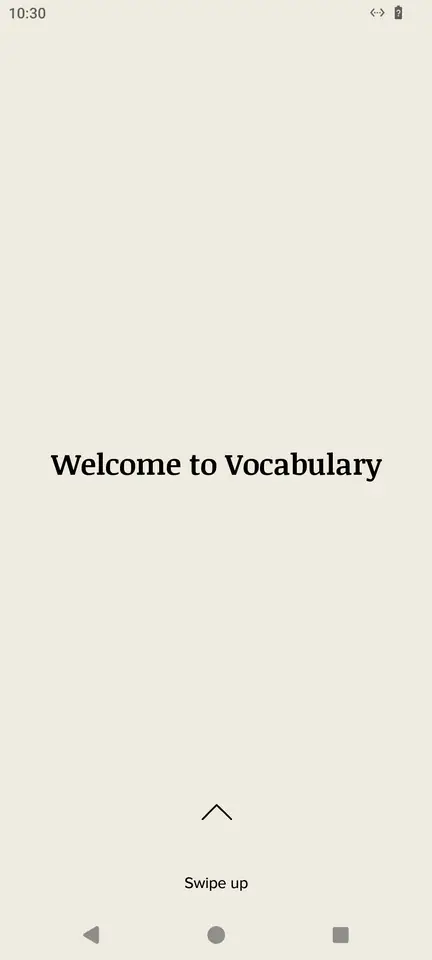
“Welcome to Vocabulary”
This screen sells the product before asking for anything. On screen: Swipe up
.
What to steal from Vocabulary
- Delay the account wall: Vocabulary lets users through 29 onboarding screens without signing up.
UI components in this flow
Other Vocabulary flows
As an X thread
- 1/ How Vocabulary onboards on Android: 29 screens, step by step. A UX teardown 🧵
- 2/ The shape of the flow: Value pitch → Question → Info → Question ×4 → Info → Question → Info → Question → Info → Permission prompt ×2 → Question ×4 → Info → Question ×4 → Info → Question ×3 → Info → Value pitch.
- 3/ Step 1 — value pitch: “Expand your Vocabulary in 1 minute a day”. It sells the product before asking for anything. Tap: “Get started”.
- 4/ Step 2 — question: “How did you hear about Vocabulary?”. It asks the user about themselves to personalise what comes next. Tap: “Tik tok”.
- 5/ Step 3 — info: “Tailor your word recommendations”. It explains a feature or a step. Tap: “Continue”.
- 6/ Asks 18 questions along the way, starting at step 2 with “How did you hear about Vocabulary?”.
- 7/ No sign-up or log-in screen in the 29 onboarding screens we captured — the product comes first.
- 8/ Requests a system permission at step 13, after priming it on screen.
- 9/ What to steal — Delay the account wall: Vocabulary lets users through 29 onboarding screens without signing up.
- 10/ Every screen, in order, free: https://uilane.com/teardown/vocabulary/
FAQ
How many screens is Vocabulary's onboarding flow?
We captured 29 screens of Vocabulary's onboarding flow on a real Android device. Its shape: Value pitch → Question → Info → Question ×4 → Info → Question → Info → Question → Info → Permission prompt ×2 → Question ×4 → Info → Question ×4 → Info → Question ×3 → Info → Value pitch.
When does Vocabulary ask you to create an account?
Not within the 29 screens we captured — there is no sign-up or log-in screen and the flow lets users in without an account.
What UI patterns does Vocabulary use?
Across the 38 Vocabulary screens in the library we detected welcome screen, skip button, onboarding survey, age gate, permission priming and terms and conditions agreement.
What can designers learn from Vocabulary's onboarding flow?
Delay the account wall: Vocabulary lets users through 29 onboarding screens without signing up.
Captured on a real Android device · last updated 2026-11-14